Yoga for Period Cramps: 6 Gentle Asanas for Menstrual Comfort
Six gentle, supported yoga postures and a short comfort routine for menstrual cramps.
Share on WhatsApp ↗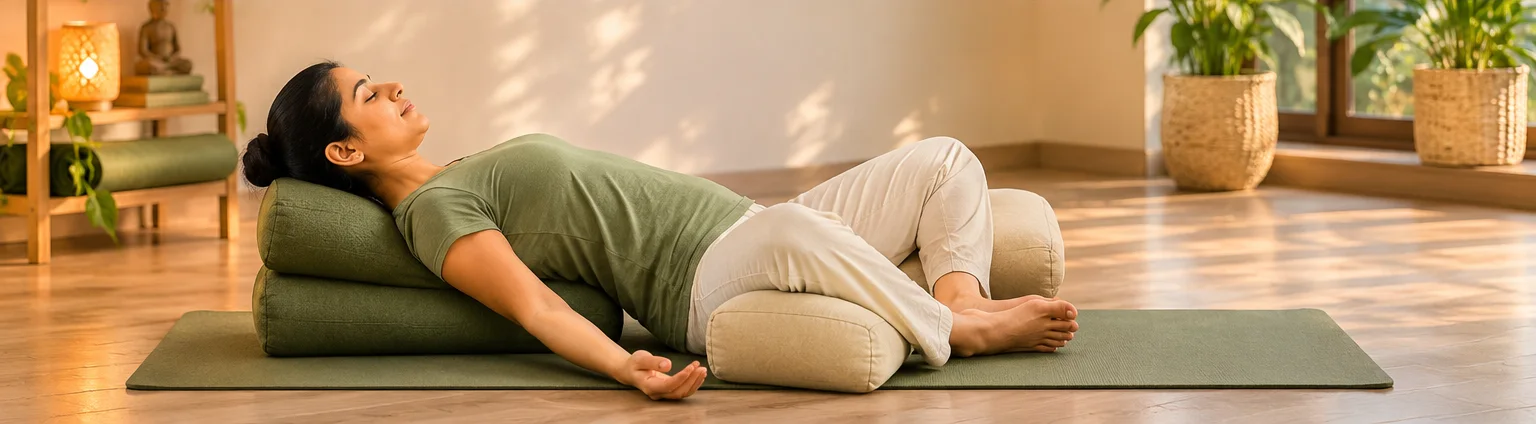
Period cramps can make even ordinary tasks feel difficult. On these days, yoga need not be a workout. A short, comfortable practice may help you relax and ease muscle tension, while rest is an equally valid choice. There is no requirement to practise during menstruation.
Why cramps happen
Menstrual cramps often occur when prostaglandins cause the uterus to contract. Pain may spread to the lower back or thighs and may be accompanied by fatigue or nausea. Gentle activity can help some people feel better, but research on yoga for menstrual pain is limited and does not establish that any specific posture reliably relieves cramps. Yoga does not treat underlying conditions such as endometriosis.
Six gentle asanas to try
Choose only positions that feel comfortable today. Keep a cushion, folded blanket and water nearby. You can stop after any posture; there is no need to complete the sequence.
Balasana — Supported child’s pose
1–2 minutes · Comfortable breathing
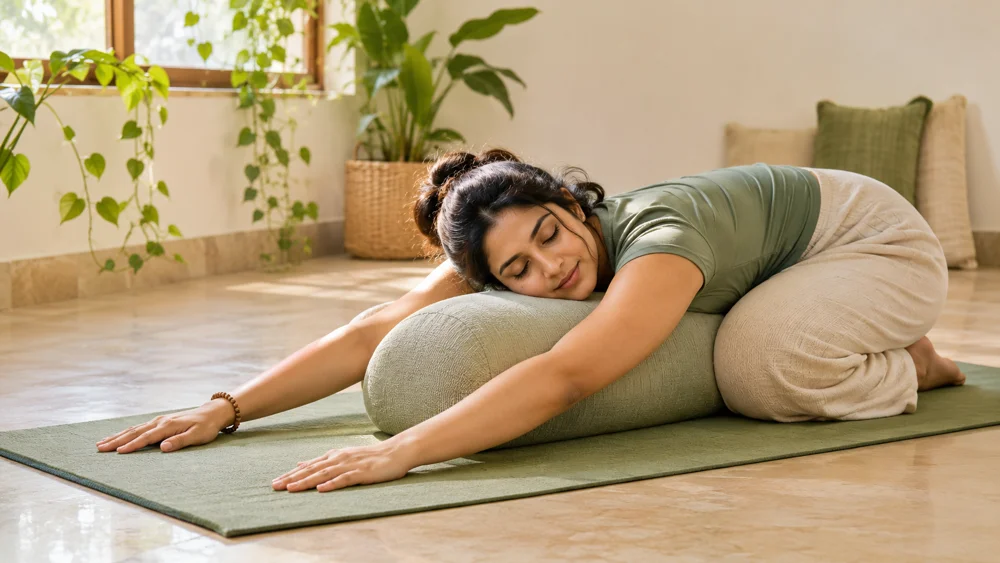
Kneel with knees comfortably apart and place a bolster under the chest. Rest the forehead on support. If kneeling hurts or abdominal pressure feels uncomfortable, skip it.
Muscle focus: Back and hip muscles. Supported gentle lengthening.
Marjaryasana–Bitilasana — Cat–cow
5–8 slow cycles · Comfortable breathing
On hands and knees, gently round the back as you exhale and lift the chest slightly as you inhale. Keep the movement small and avoid pushing into the lower back. Use a chair version if wrists or knees hurt.
Muscle focus: Spinal extensors and abdominal muscles. Alternating gentle engagement and lengthening.
Baddha Konasana — Supported seated butterfly
1–2 minutes · Comfortable breathing
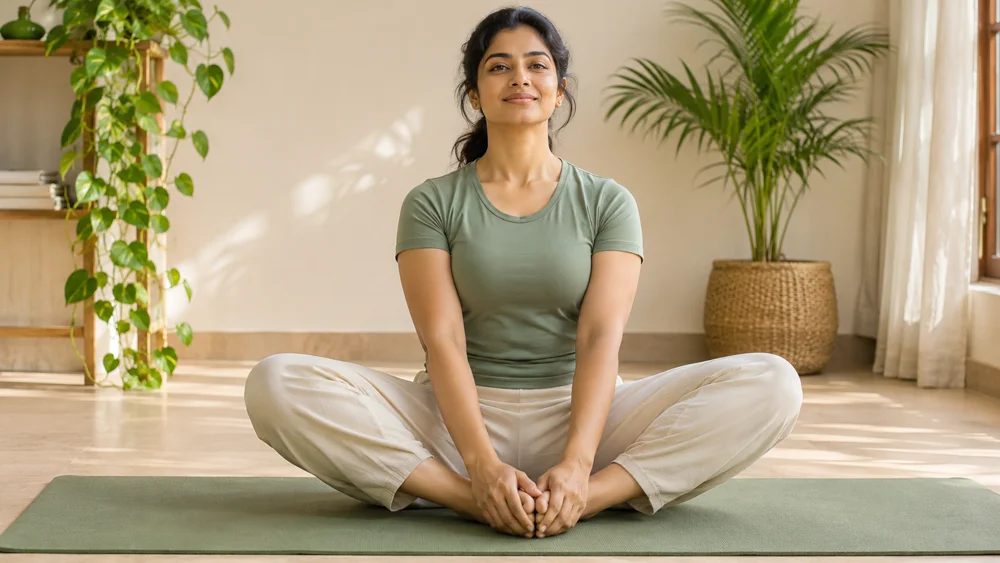
Sit on a folded blanket, bring soles together and support both knees with cushions. Keep feet farther away if the hips feel tight. Do not press the knees down.
Muscle focus: Inner thigh adductors. Gentle lengthening with knee support.
Supta Baddha Konasana — Reclined butterfly
2–3 minutes · Comfortable breathing
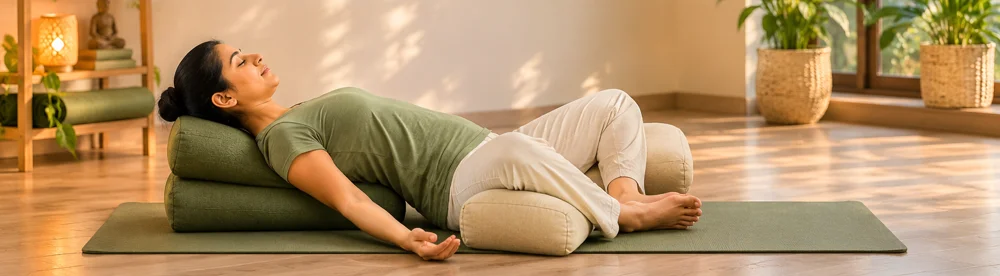
Recline on a bolster with knees supported by cushions and soles together. Let the abdomen soften without forcing a stretch. If the position pulls at the groin, bring knees together.
Muscle focus: Inner thigh adductors. Supported passive stretch.
Apanasana — Gentle knees toward chest
3–5 breaths per side · Comfortable breathing
Lie on your back and draw one knee toward you, holding behind the thigh. Keep the other foot on the floor. Switch sides. Avoid pressing into a tender abdomen.
Muscle focus: Gluteals and lower-back region. Gentle lengthening without abdominal pressure.
Savasana — Supported relaxation
3–5 minutes · Comfortable breathing
Lie on your back with a cushion under the knees or rest on your side with a pillow between the knees. Allow breathing to settle without holding it.
Muscle focus: Whole-body resting muscles. No deliberate strengthening; supported relaxation.
A simple ten-minute comfort routine
Begin with a minute of quiet breathing. Try one minute of gentle cat–cow, two minutes of supported butterfly, two minutes of supported child’s pose if comfortable, and four minutes of supported relaxation. Substitute side-lying rest for any movement that increases discomfort. A warm compress and gentle walking may also help.
What to avoid when you feel uncomfortable
Skip intense abdominal work, forceful breathing, deep twists or demanding sequences if they aggravate symptoms. Menstruation alone does not make every inversion or vigorous posture medically unsafe, but there is no need to perform them when you feel unwell. Let symptoms and individual medical advice guide your choices.
When cramps need medical attention
Speak with a healthcare professional if pain repeatedly disrupts work or sleep, becomes progressively worse, occurs between periods, or accompanies unusually heavy bleeding. Seek urgent care for sudden severe pain, fainting, fever, or severe pain with possible pregnancy. Do not rely on yoga to manage these symptoms. A clinician can discuss appropriate treatment and investigate possible causes.
Can I practise on the first day?
Yes, if you feel comfortable and have no medical reason to avoid it. A few minutes of supported rest may be enough. If pain increases, stop rather than pushing through.
Will yoga stop period cramps?
Not necessarily. Some people find gentle movement helpful, while others prefer rest or medical treatment. Your experience may vary from one cycle to the next.