7 Gentle Yoga Practices for Women Living With PCOS
Seven accessible movements and breathing practices for everyday well-being.
Share on WhatsApp ↗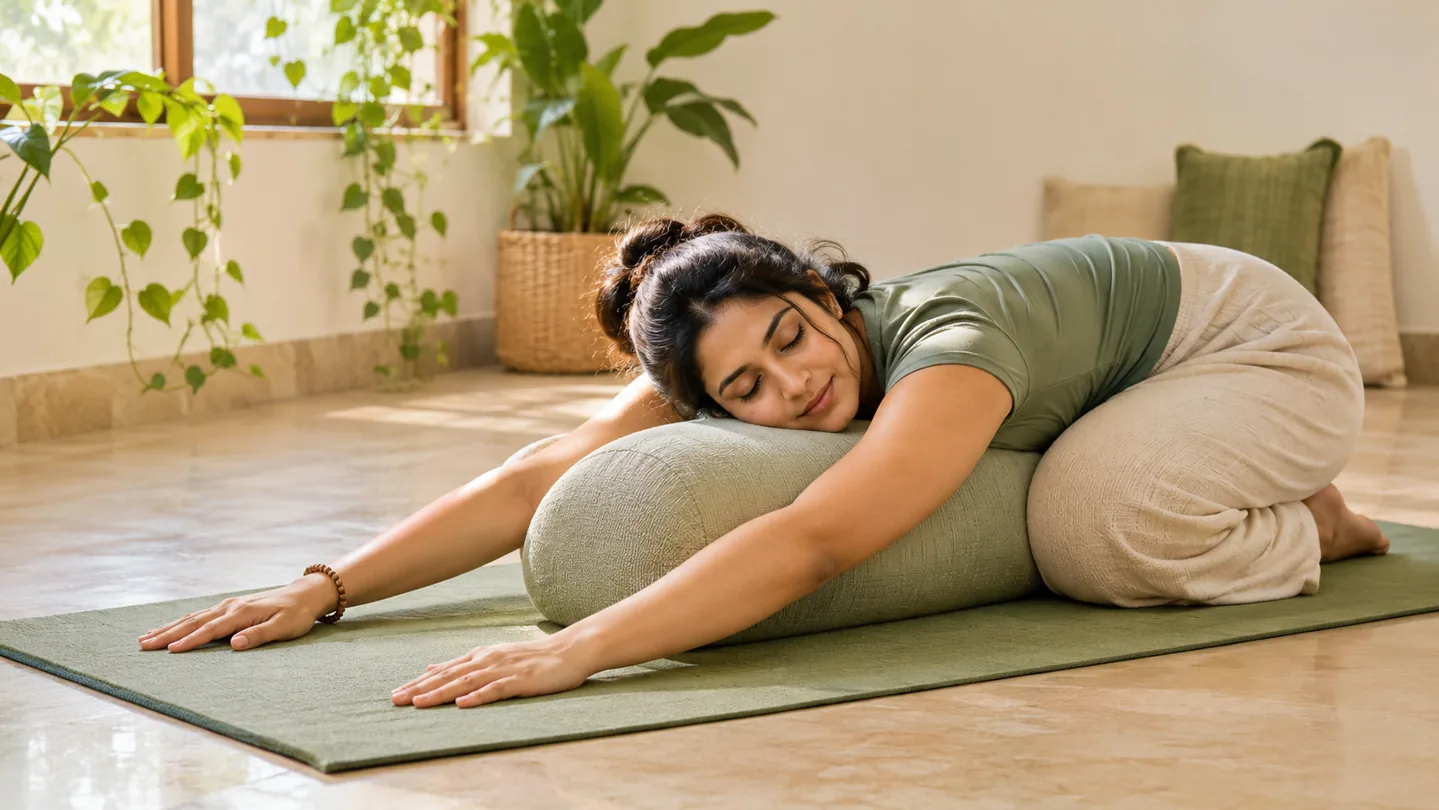
Choose comfort over intensity
A gentle yoga session can offer a manageable way to move on days when energy is low or a demanding workout feels unrealistic. These seven options are general movement practices, not treatments for PCOS or techniques to change hormone levels. Choose the ones that feel comfortable and adapt the session to your health and current activity level.
1. Supported sitting
Sit on a stable chair with feet on the floor or on a cushion with back support. Notice ordinary breathing for one or two minutes. If focusing on the breath feels uncomfortable, look around the room and notice your surroundings instead.
2. Shoulder mobility
Lift the shoulders gently and let them settle. Make a few small backward circles without forcing the neck. This is a useful transition from desk work into movement. Stop if you notice pain or tingling.
Supported mountain pose
Seated side bend
Cat–cow
Supported butterfly
Chair twist
Natural breath awareness
Supported rest
3. Mountain pose
Stand near a wall with feet comfortably apart. Distribute your weight evenly and keep the knees soft. Remain for a few ordinary breaths. Use support if balance is difficult.
4. Supported sit-to-stand
From a sturdy chair, stand slowly and sit back down with control. Use the chair arms or another stable support if needed. Begin with a few repetitions and rest before fatigue affects your balance.
5. Seated butterfly
Sit with the soles of the feet together only if this position is comfortable. Support the thighs with cushions and keep the feet farther from the body if needed. Do not push the knees down or bounce. Skip this posture if it irritates the hips or knees.
6. Gentle side movement
While seated, slide one hand down the side of the chair or thigh and lean slightly in that direction. Return to the middle and repeat on the other side. Keep the movement small and breathe normally.
7. Supported rest
Sit with back support or lie in a comfortable position with pillows. Allow a few minutes of rest without trying to control every thought. Change position if lying down is uncomfortable.
Put the practices together
Choose three or four options for a ten-minute session. On another day, add a comfortable walk if appropriate. If you are undergoing fertility treatment, ask your clinic which movements and intensity are suitable. Stop if you experience pelvic pain, dizziness or unusual symptoms. Regular activity should support your well-being, not create pressure to complete a prescribed sequence.
Frequently asked questions
Do these poses regulate periods?
There is insufficient evidence to promise that specific yoga poses regulate menstrual cycles. Discuss cycle changes with your clinician.