How to Start Yoga at Home: A Complete Beginner’s Guide
A small space, a few mindful minutes and a practice that meets you where you are.
Share on WhatsApp ↗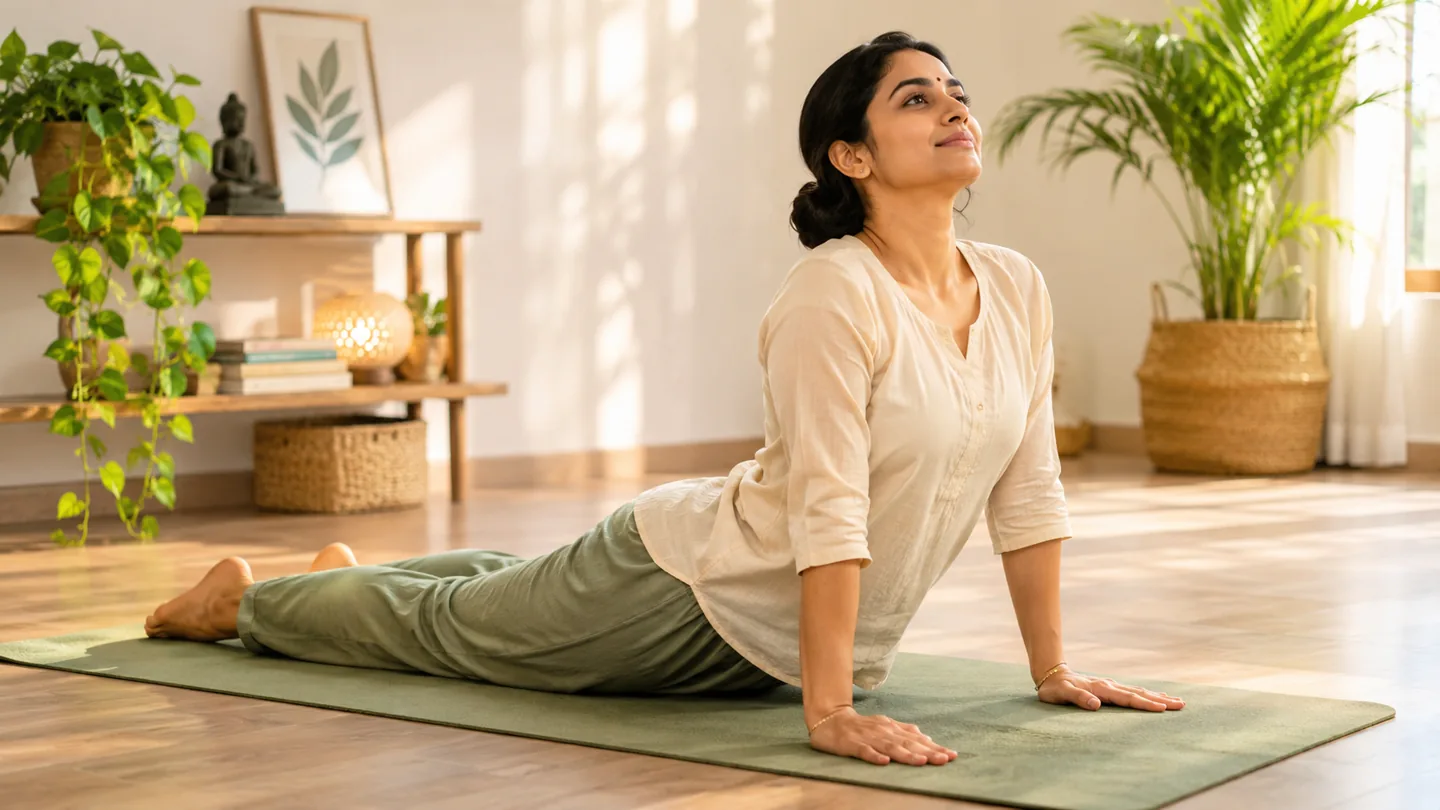
Begin with what you have
Starting yoga at home can feel overwhelming when videos show complicated postures and long sequences. You do not need a dedicated studio, expensive equipment or exceptional flexibility. A small clear area, comfortable clothing and a few minutes of uninterrupted time are enough to explore basic movement. The goal is to establish a practice that fits your life rather than recreate an idealized routine.
Prepare a safe space
Choose a stable, non-slip surface and move furniture away from your practice area. Check that you can extend your arms without hitting anything. A sturdy chair or wall can provide support during standing movements. Keep your phone or screen at a comfortable viewing height if following instructions. Avoid practising on a slippery floor or unstable chair.
Learn a few foundational movements
Mountain pose teaches awareness of standing balance. Stand with feet comfortably apart and knees relaxed. Notice the pressure under both feet and breathe normally. A supported sit-to-stand develops control: sit on a stable chair, stand slowly using support as needed, then return to sitting. Repeat only while comfortable.
Space
Clear enough room to move safely.
Mat
Use a stable, non-slip surface.
Clothing
Wear comfortable clothing.
Support
Keep a sturdy chair nearby.
Seated shoulder rolls and ankle movements can help you explore gentle mobility. For a resting position, sit with back support or lie comfortably with pillows. You do not need to complete every posture in a sequence. Skip any movement that causes pain, tingling or dizziness.
Create a fifteen-minute session
Spend two minutes settling and noticing your surroundings, three minutes on easy joint movements, six minutes exploring two or three familiar postures, and four minutes resting or moving gently. This is a flexible example rather than a required schedule. On busy days, five comfortable minutes may be enough to maintain the habit.
Build a realistic first month
During the first week, learn the movements rather than increasing intensity. In the second week, repeat familiar sessions on two or three days. Gradually add time if recovery is comfortable. Keep a note of what felt manageable and what you want to ask an instructor. Avoid making up missed sessions with unusually long workouts.
Know when guidance matters
A qualified instructor can help you learn modifications and choose an appropriate pace. If you have an injury, pregnancy, recent surgery or a medical condition, seek individualized advice before starting unfamiliar exercise. Stop if you experience sharp pain, faintness or unusual breathlessness. Yoga is one part of a healthy movement routine; walking and strength work can complement it.
Frequently asked questions
Can I start without a yoga mat?
Yes, for suitable seated or standing movements on a stable surface. A non-slip mat is useful for floor practice.