5 Common Pranayama Mistakes and How to Avoid Them
A calmer approach to breath, posture and progress.
Share on WhatsApp ↗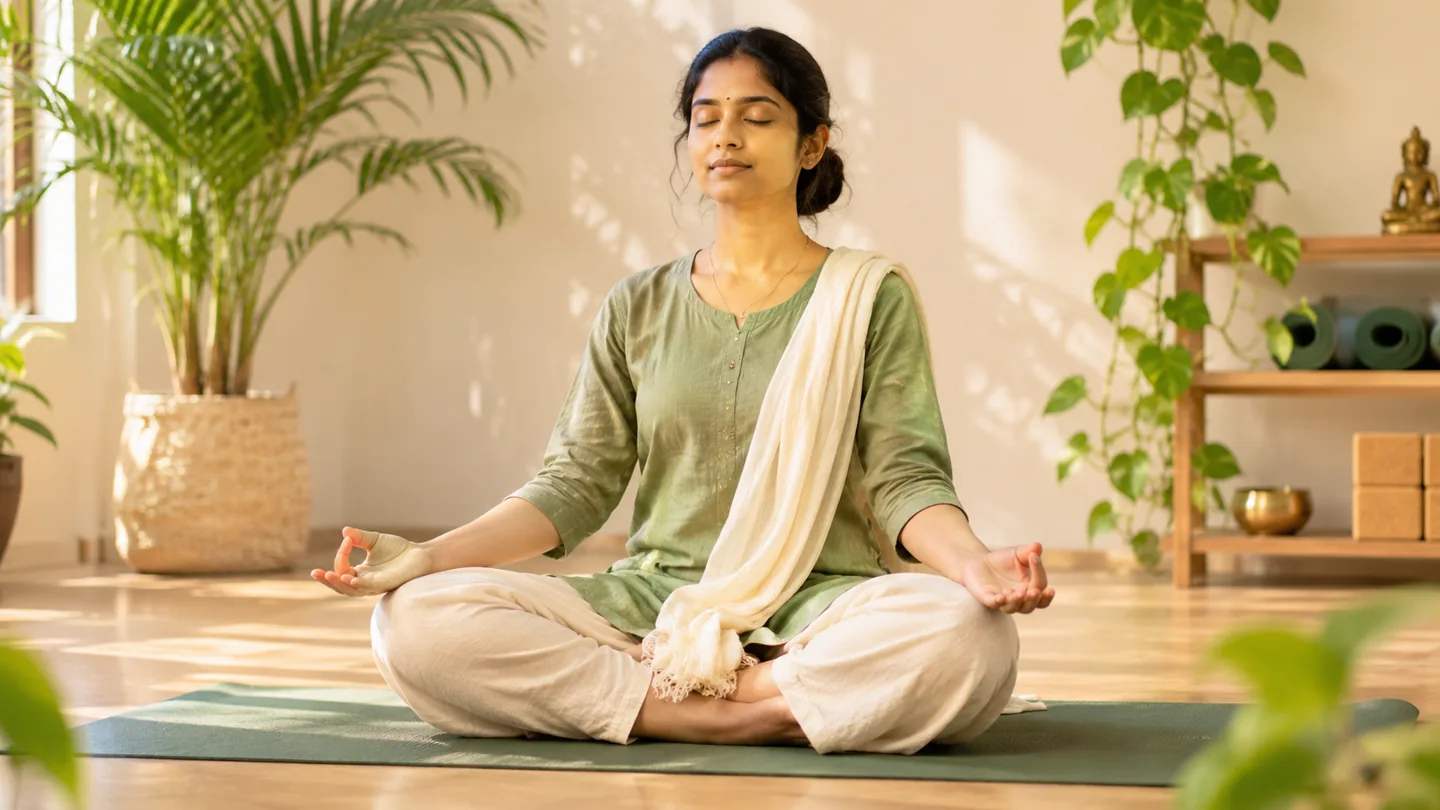
Let the breath remain comfortable
Pranayama is a yogic practice involving regulation of breathing. Beginners often approach it as a challenge to take the deepest possible breath or maintain a rhythm for as long as possible. Yet the ability to notice discomfort and return to ordinary breathing is more valuable than achieving a particular count. Start with a few minutes in a comfortable position and avoid comparing yourself with experienced practitioners.
Mistake 1: Forcing the breath
Repeatedly taking very large or rapid breaths can cause lightheadedness, tingling or discomfort. Instead of filling the lungs as much as possible, allow the breath to move naturally. Notice the movement around the ribs or abdomen without trying to exaggerate it. If you become dizzy, stop the exercise and breathe normally while seated safely.
Mistake 2: Practising after a heavy meal
A full stomach can make sitting and breathing exercises uncomfortable. Choose a time when digestion is not interfering with your comfort. There is no need to skip meals or follow a rigid fasting rule to practise gentle breath awareness. People who feel faint when hungry should adjust their timing.
Forceful breathing
Choose a gentle, comfortable breath.
Full stomach
Allow time for digestion.
Rigid posture
Sit upright with relaxed shoulders.
Strained holds
Avoid pushing your limits.
Advanced techniques
Build a foundation first.
Mistake 3: Confusing upright posture with stiffness
You do not have to sit cross-legged. A chair with feet resting on the floor may be more comfortable. Let the spine remain naturally upright and allow the shoulders and jaw to relax. If your back becomes tired, use support or change position rather than struggling through the session.
Mistake 4: Holding the breath too long
Breath retention is an advanced component of some traditions, not a necessary starting point. Avoid holding your breath until you feel desperate to inhale. People with cardiovascular or respiratory conditions, pregnancy or other medical concerns should seek appropriate guidance before attempting breath retention or forceful techniques.
Mistake 5: Rushing into advanced practices
Fast breathing techniques require appropriate instruction and are not suitable for everyone. A beginner can gain familiarity with breath awareness without practising them. Try sitting comfortably for two minutes and noticing ordinary breathing. If attention wanders, return gently to the sensation of breathing or to the feeling of your feet on the floor.
Make a simple routine
Choose a quiet moment, settle into a supported position and notice your breath for a minute. Continue for another two minutes only if comfortable. Finish by noticing the room around you. If breath awareness makes you anxious, try eyes-open grounding instead. Progress means becoming more aware of your limits, not increasing the duration at every session.
Frequently asked questions
Should I follow a fixed breathing ratio?
Not as a beginner if it creates strain. Comfortable ordinary breathing is a suitable starting point.