Yoga for Flexibility: Where to Begin
Develop comfortable mobility gradually without forcing your body.
Share on WhatsApp ↗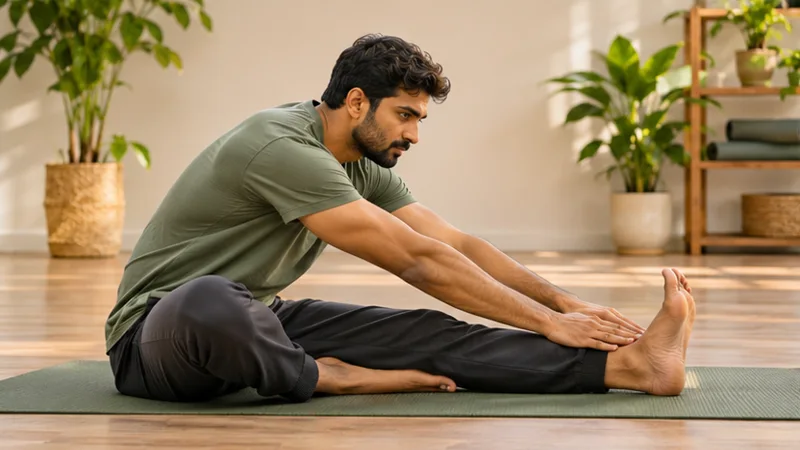
Flexibility is not a performance
A person who cannot touch their toes may assume yoga is not for them. Yet range of motion differs with anatomy, age, activity history and health. The goal is not to match a photograph but to move with greater comfort and control in the range available to you. A deeper posture is not automatically a better posture.
Understand the difference between tension and pain
A mild stretching sensation can be acceptable, but sharp pain, tingling or numbness is a reason to stop. Avoid bouncing or pulling yourself into a position. Breathe normally and reduce the range if you find yourself holding your breath. Joint pain should not be treated as evidence that a stretch is working.
Three areas to explore
For the calves, stand facing a wall and step one foot back, keeping the heel comfortably grounded. Hold gently for fifteen to twenty seconds and change sides. For the back of the thigh, sit on a stable chair, extend one leg with the heel on the floor and lean slightly forward from the hips while keeping the back comfortable. A small movement is enough.
For the shoulders, bring one arm across the chest and support it lightly with the other arm. Keep the shoulder relaxed and avoid pressing on the elbow joint. These are examples of accessible movements, not a prescription for every person.
Combine mobility and strength
Flexibility describes available range; mobility also involves controlling movement through that range. Strength work can complement stretching. Supported sit-to-stands and wall push-ups, for example, develop control in everyday movements. A balanced routine is more useful than spending every session trying to stretch farther.
Build a gradual routine
Warm up with a few minutes of walking or easy joint movement. Choose two or three stretches, repeat each comfortably and finish with ordinary movement. Practise regularly rather than forcing long sessions. Track functional changes such as reaching a shelf or putting on shoes more comfortably, not just how far your hands reach.
If you are unusually flexible already, prioritize stability and control instead of increasing range. Persistent stiffness after injury, swelling or loss of movement deserves assessment by a healthcare professional.
Frequently asked questions
How soon will I become flexible?
There is no fixed timeline. Regular comfortable practice may improve range over time, but anatomy and health influence the result.